
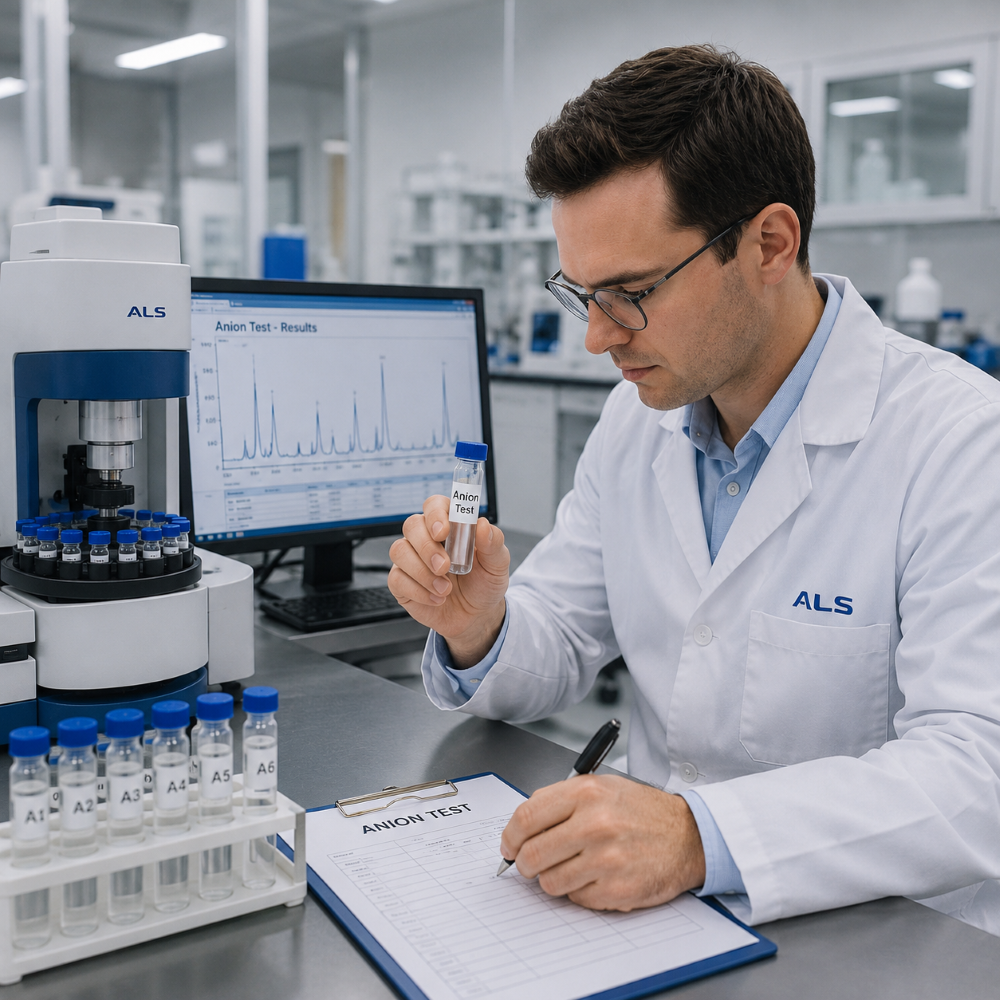
How to Interpret Anion Test Results and Trace PCB Contamination
An anion test can show that chloride, sulfate, acetate, formate, or another ionic species is sitting on a circuit board, but the result alone doesn’t reveal where that contamination came from. Turning lab data into an actual fix means comparing the ion profile against soldering materials, cleaning conditions, process water, handling, and where exactly the residue sits on the board. This matters a lot for automotive electronics, since ionic residue can stay harmless during dry functional testing but turn conductive once humidity or condensation shows up, slowly contributing to corrosion, leakage current, or intermittent faults that are hard to reproduce once the product’s already in service.
What a Good Anion Test Report Should Show
Ion chromatography separates the ions in an extracted sample and reports each species individually. PCB results usually get converted into surface contamination values, like micrograms per square centimeter, so they can be checked against the applicable cleanliness spec. A useful report shows more than just a total number.
| Report item | Why it matters |
| Individual anion concentration | Shows which ionic species is the concern |
| Surface area calculation | Lets results be compared between boards |
| Chromatogram | Shows how the ions were separated and detected |
| Extraction method | Confirms how residue was removed from the sample |
| Blank result | Helps confirm contamination didn’t come from the test itself |
Acceptance limits aren’t the same across every assembly. The right limit should come from the relevant customer spec, OEM requirement, or IPC document, not a generic threshold applied to everything.
What Different Anions May Indicate
The ion profile gives useful clues about which production stage to check first, though one compound can have several possible sources, so treat the results as a lead worth investigating rather than final proof.
| Anion detected | Possible source to investigate |
| Chloride | Flux activators, handling, packaging, storage, or process chemicals |
| Fluoride | Certain flux formulations or etching residues |
| Bromide | Flux chemistry, flame-retardant materials, component packaging |
| Sulfate | Process chemicals, cleaning systems, environmental deposition |
| Acetate | Organic-acid and no-clean flux residues |
| Formate | Flux activator decomposition or incomplete thermal processing |
Chloride is usually treated as the highest priority since it’s mobile, soluble, and tied to corrosion risk. Acetate and formate tend to point toward organic-acid or no-clean flux residue, especially when the soldering process hasn’t fully deactivated the flux chemistry.
Use Sampling Location to Narrow the Source
A whole-board extraction gives an overall cleanliness result, but it can hide where the contamination is actually concentrated. If a value comes back elevated, follow-up testing can zoom in on specific board regions, component groups, or process stages. Contamination near a connector, for example, usually points to a local assembly or handling step, while contamination spread across the whole board tends to mean storage conditions, process water, or environmental exposure is the culprit.
Comparing samples before and after reflow, cleaning, or final assembly can also show exactly when the residue first shows up. This staged approach usually tells you more than testing finished assemblies over and over without changing anything about the sampling plan.
Compare Results With the Soldering Process
Flux chemistry and the thermal profile are worth reviewing whenever acetate, formate, chloride, ammonium, or organic amines come back elevated. No-clean flux doesn’t guarantee zero risk. Its activators are meant to go inactive during soldering, but too much flux or the wrong thermal profile can leave hygroscopic, chemically active residue behind.
It helps to compare lab findings against flux application volume, preheat conditions, peak temperature, time above liquidus, and conveyor speed, since a profile that works fine on one board design might behave completely differently on another with denser components or different copper distribution.
Check Cleaning, Water, and Handling Controls
When a cleaned assembly still shows elevated contamination, the problem might be ineffective rinsing, contaminated wash fluid, poor filtration, or residue trapped underneath components. Process-water samples and cleaning solutions can also get analyzed to check whether they’re adding ions rather than removing them. Handling and packaging shouldn’t get ignored either, since bare hands, unsuitable gloves, cardboard, and nearby chemical processes can all introduce contamination after soldering.
Manufacturers arranging a professional anion test can give ALS Testing the PCB dimensions, cleanliness specification, flux type, soldering profile, cleaning process, and suspected failure location. ALS Testing reports individual ionic species and chromatogram data to support process investigation.
Confirm the Fix With Comparable Retesting
Retesting should answer one specific question, like whether a revised reflow profile actually cut formate residue, or whether a cleaning-process change lowered chloride levels. The follow-up sample should use the same extraction method, surface-area calculation, and reporting conditions as the original test, since changing several things at once can produce a passing result without telling you which change actually solved the problem.
A stronger approach is documenting the suspected source, making one controlled change, and comparing the new ion profile against the original. Manufacturers arranging an anion test can also work with ALS Testing to support electronics manufacturing and quality assurance projects in Malaysia, whether for process qualification, contamination troubleshooting, or customer validation requirements. Handled this way, an anion test becomes more than a final cleanliness check. It gives species-level evidence that helps trace contamination and verify a fix before latent failures show up out in the field.